Paxton Domestic Moving Animation
Client: Paxton Companies
Producer: Jeremy Carpel
Illustration: Rachel Maves
Additional Illustration: Mithra Krishnan
Additional Animation: Leah Schmaltz
Background
As I was wrapping up my senior year of college, I was approached by a grad student in the film department for help creating an animation for Paxton. The video needed to tell the story of the process and best practices for international moving. I was very green at the time and my illustration and animation skills were, well – also green. That being said, we managed to produce a final product that the client was happy with and told Paxton’s clients what to expect when embarking on a move out of the country.
Ten years later, Paxton reached back out to the same producer that approached me in college and wanted to tweak the video for domestic moving. The problem? Many of the original source files had been corrupted or improperly archived as I moved and shuffled jobs of the years. Not to mention that my animation capabilities and eye for good design had improved drastically in the past decade.
Instead of working out a way to Frankenstein a decade-old video to update it with a different process, we came back to the client with a proposal to rebuild the animation with more professional illustration that would better resonate with current and potential future clients. I brought the incredibly talented Rachel Maves on board to establish the character and overall design language of the piece and really evolve it beyond the simplistic characters I had previously created.
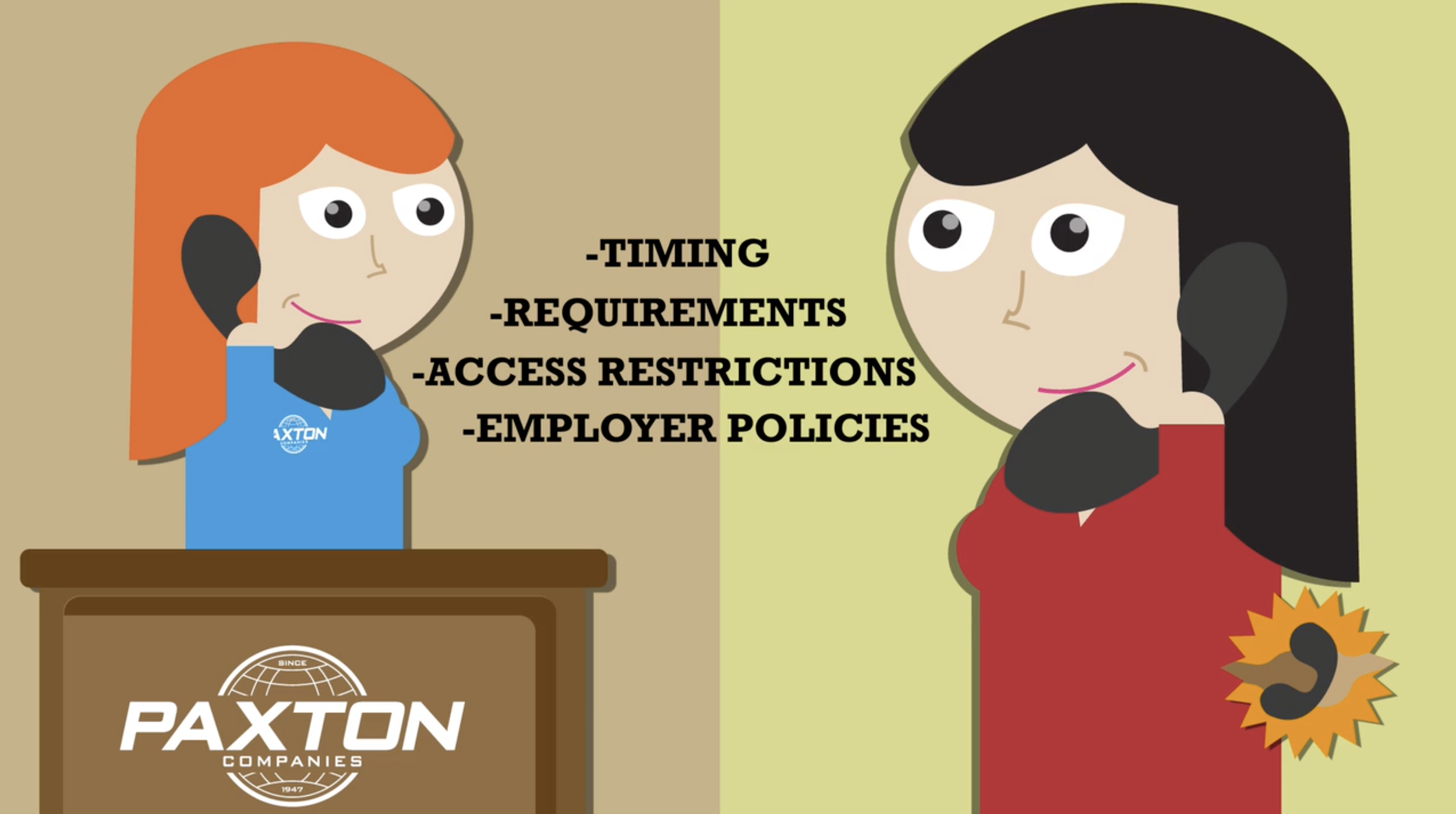
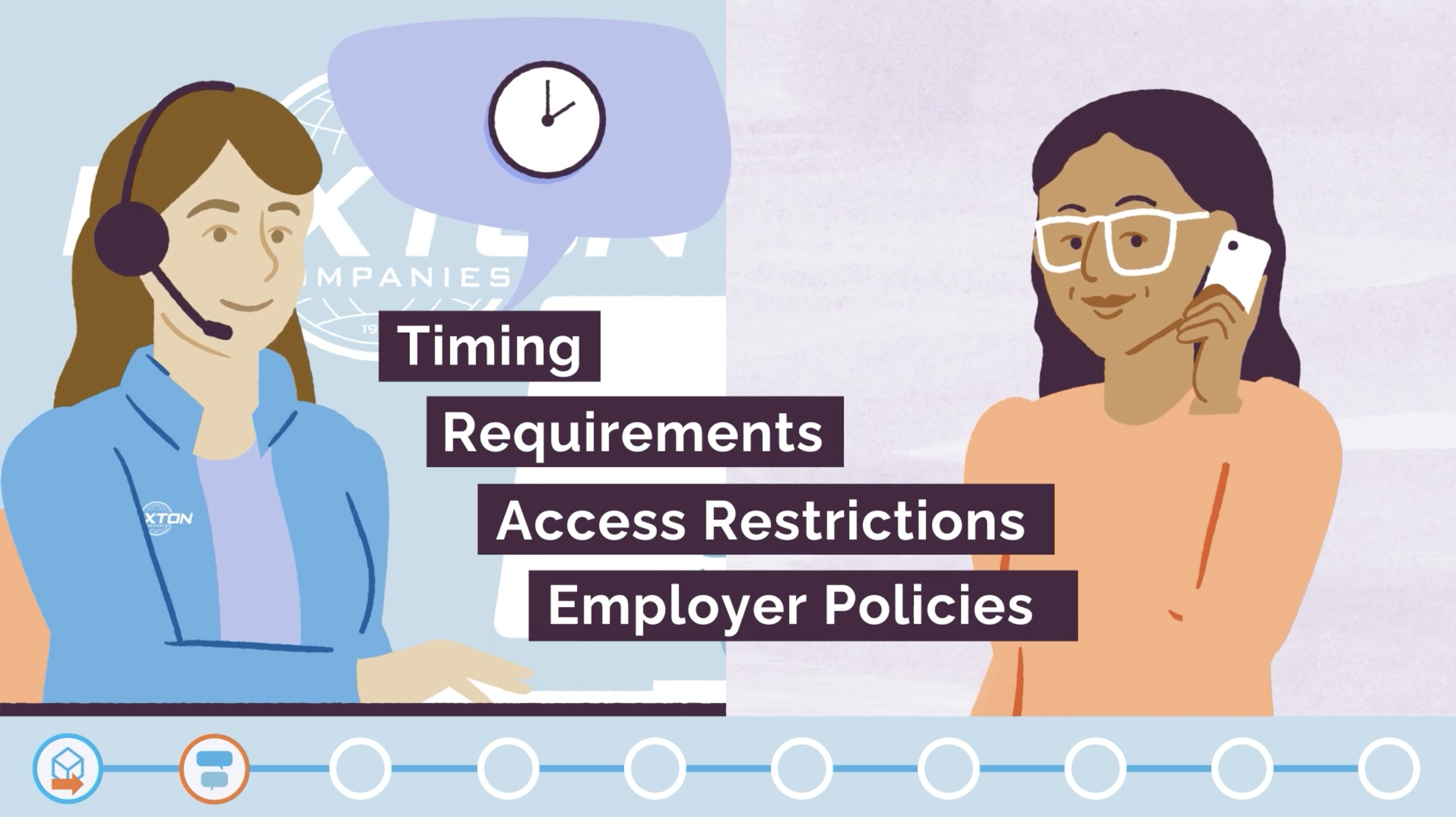
A scene from the original video I made in college vs the same scene updated with new design
Production
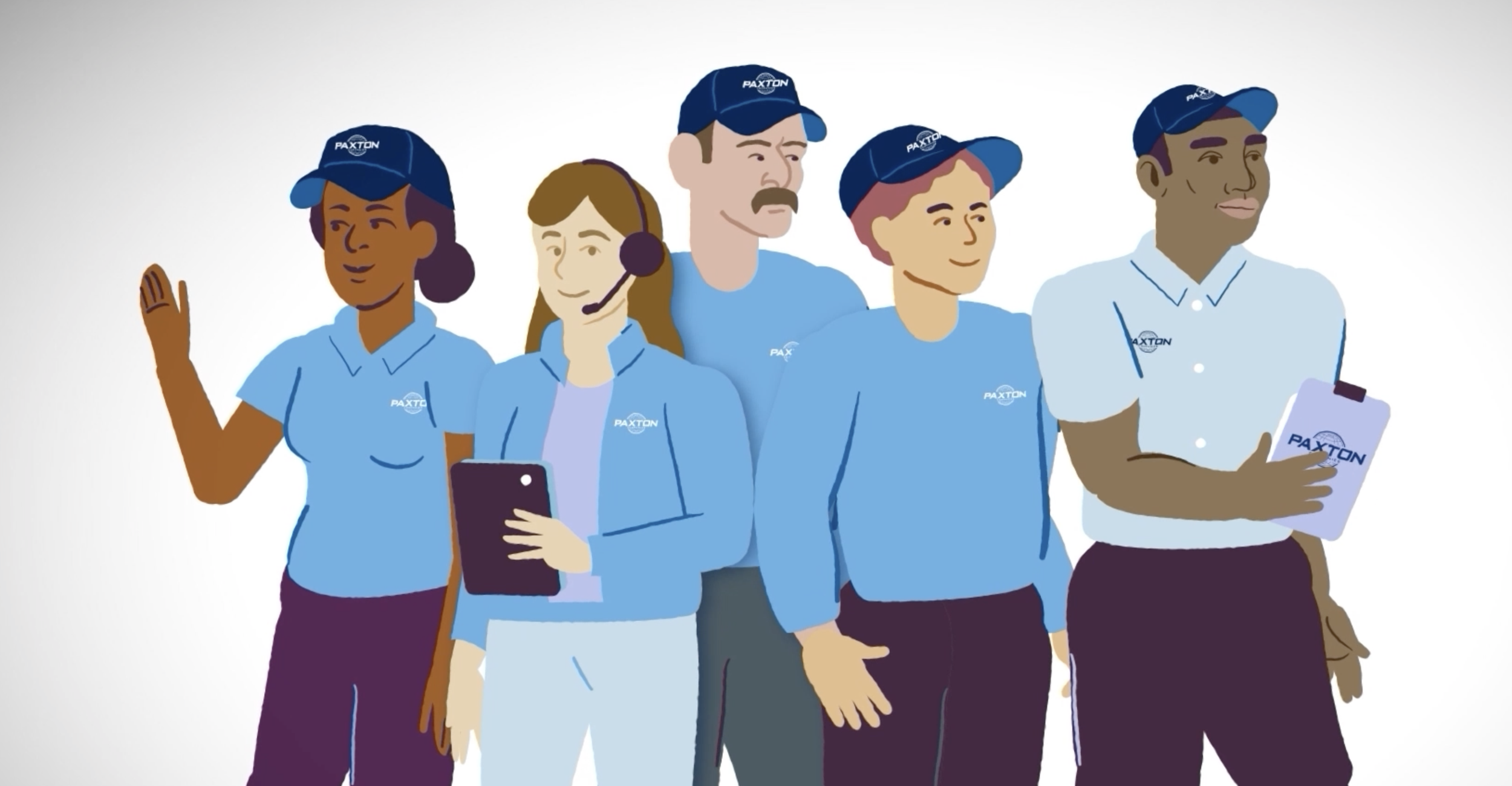
We started with nailing down the look and feel of the characters. We wanted them to represent well the diversity of both Paxton’s crew as well as their clientele. There was a short window for pre-production, and the client wanted the script to have the freedom to dynamically evolve during the animation process. So, rather than the traditional storyboarding and planning, we approached the script with a modularity to the design, focusing on the set pieces and characters so that I could handle character blocking and scene framing as the narrative continued to develop.
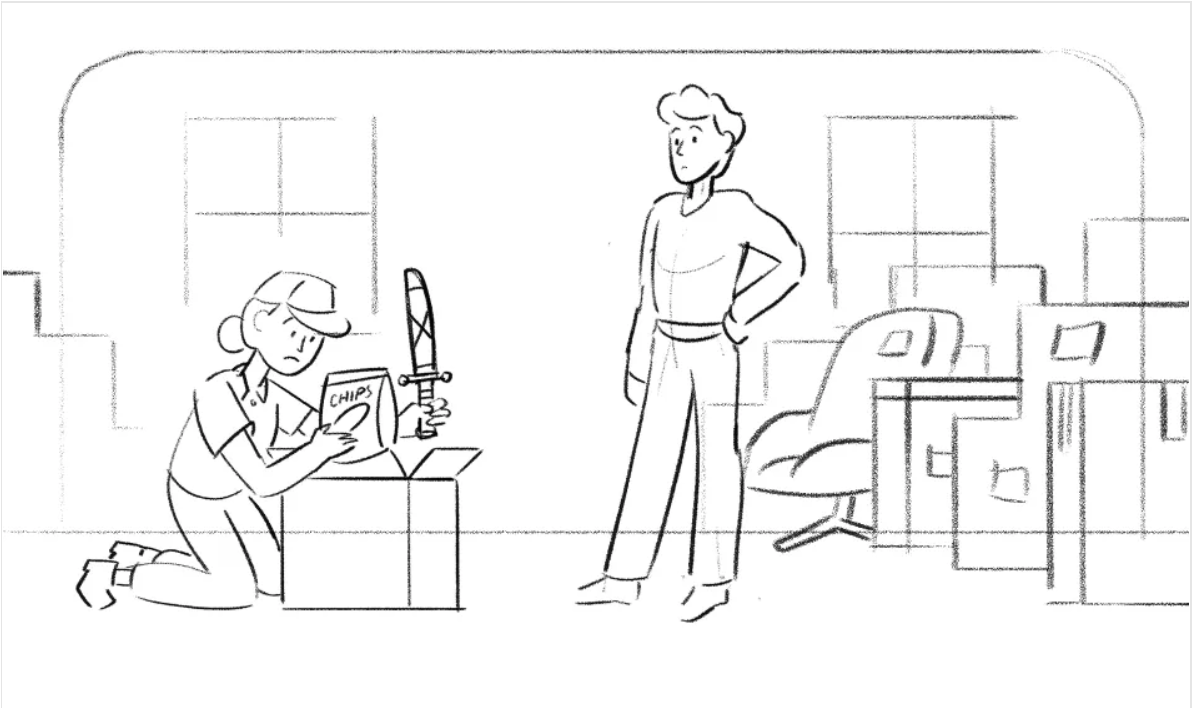
Early storyboard frame
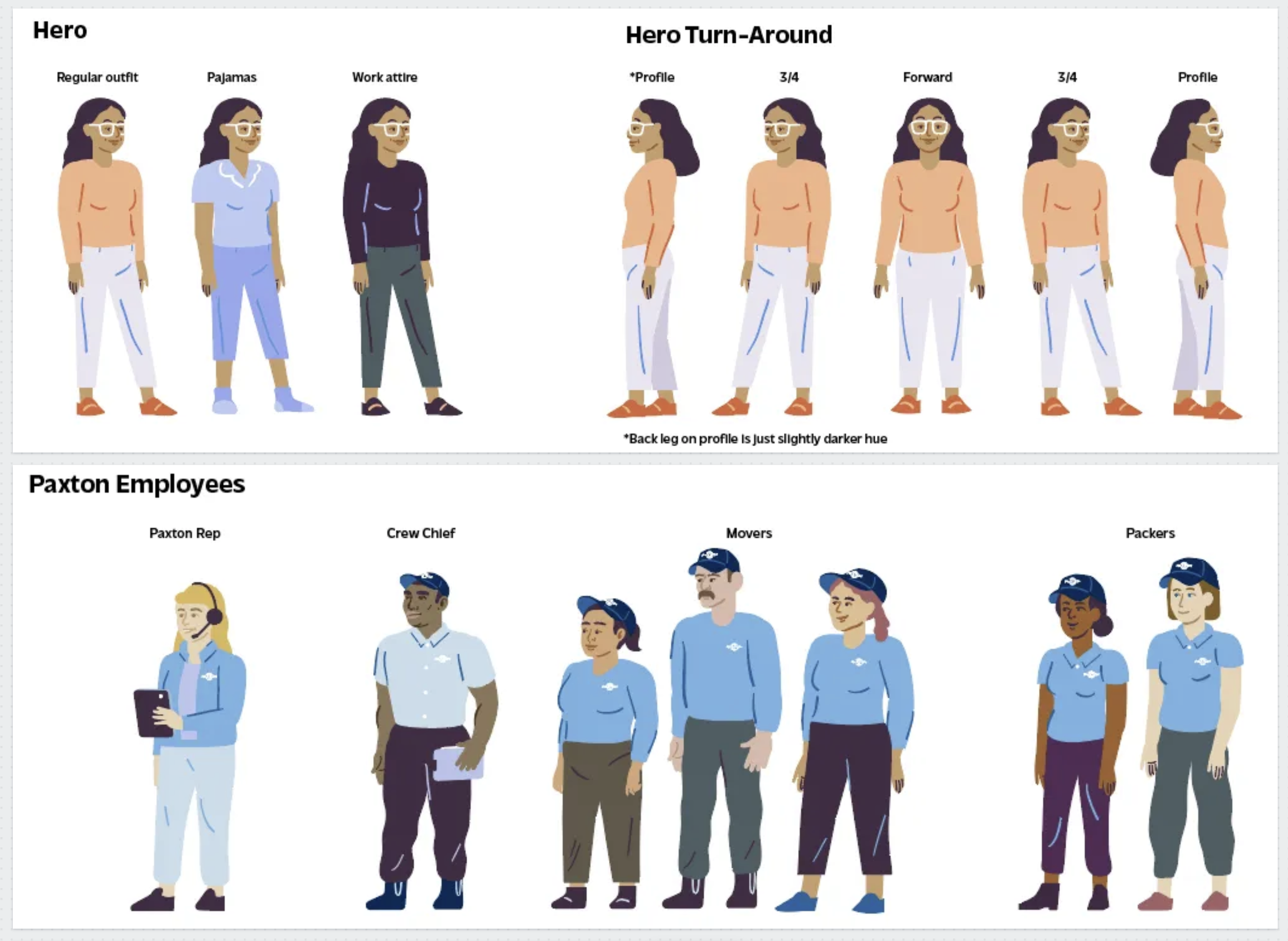
Character designs and turnarounds created by Rachel
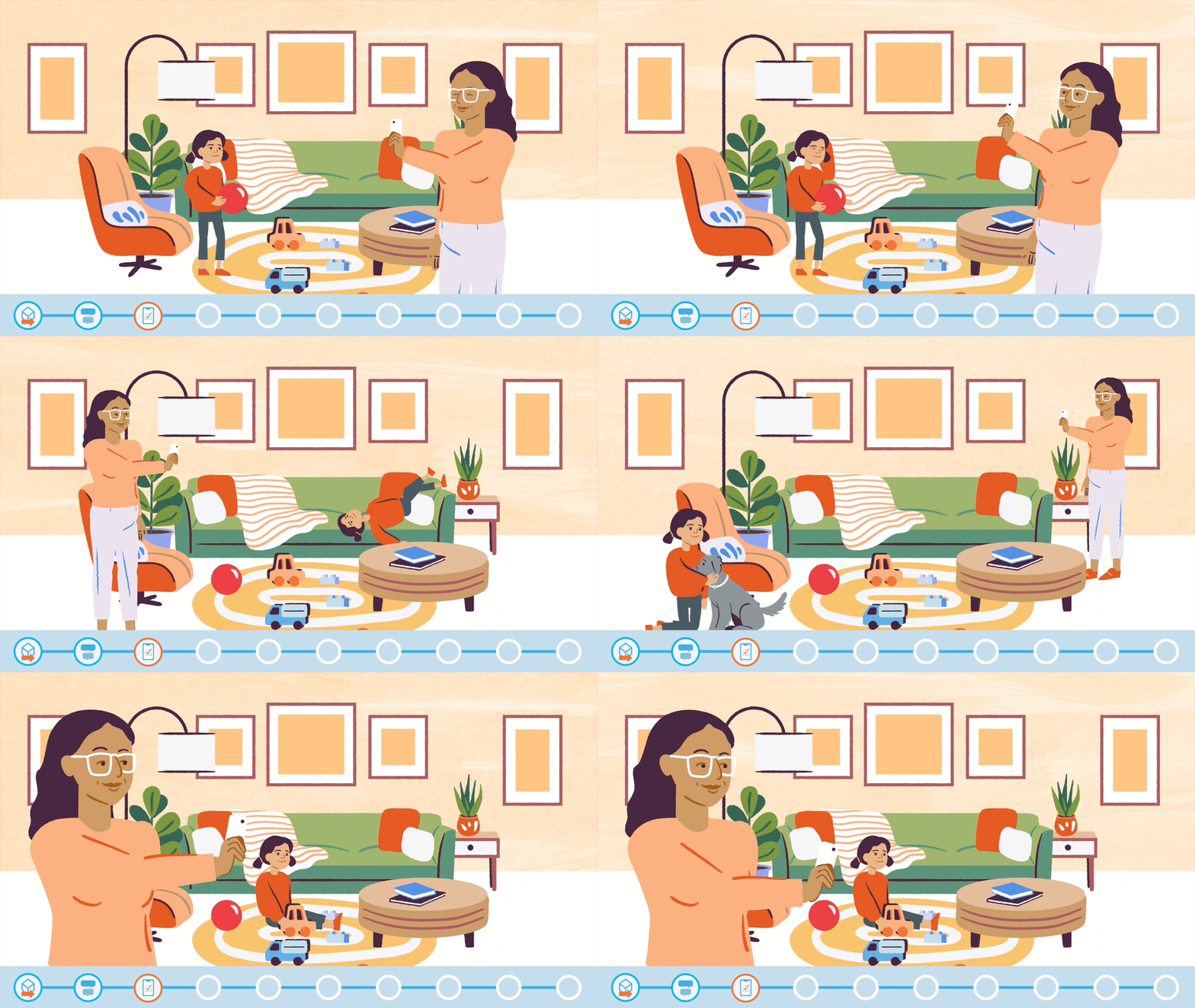
It was often a fun challenge figuring out how to execute the script given budgetary and timeline constraints. One scene that comes to mind is during the “virtual walkthrough.” The scene called for our protagonist to walk around her home, filming each corner of rooms to give the moving crew an idea of how many items are in the home as well as what equipment they’ll need. I was finding that building a convincing walk cycle for the protagonist was not only going to take a lot of production time, but it would also add to the overall runtime of the piece. As a solution, I instead made a series of cuts with the protagonist and her daughter in different positions to illustrate a passage of time as she completed the virtual walkthrough.